


EU CPSR Cosmetics CPNP Notification Filing
Author:CNQI Number of views:528 Date:2024-04-24
Overview of EU Cosmetic Regulations
In order to protect the safety of EU consumers using cosmetics, on December 23, 2009, the European Commission published the latest Cosmetics Regulation (2009/1223/EC) on its official website, which includes 40 articles and 10 appendices, replacing the previous EU Cosmetics Regulation (76/768/EC) and 67 revised documents. This regulation was released in the form of an EU regulation on July 11, 2013, and officially implemented as a national law in 27 EU member states (as well as Norway, Iceland, and Liechtenstein). It comprehensively unifies the relevant legal provisions of the cosmetics industry in each EU member state, while ensuring its implementation throughout the entire EU member state.
The definition of "cosmetics" by the European Union refers to substances or preparations applied to any part of the human body surface (epidermis, hair, nails, lips, and external genitalia), teeth, and oral mucosa, with the purpose of cleaning, increasing aroma, changing appearance, correcting body odor, protecting or maintaining its good condition. Substances or mixtures that need to be ingested, inhaled, injected or implanted into the human body are not considered cosmetics.
The responsible person for cosmetics, that is, when cosmetic products are placed on the EU market, must designate a legal or natural person within the EU to assume compliance obligations. This regulation requires the responsible person for cosmetics to conduct a safety assessment of the cosmetics sold before placing them on the EU market, and to file the product through the EU Cosmetics Online Notification System (CPNP).
The EU cosmetics regulations also have corresponding regulations and requirements for the labeling and labeling of cosmetics placed on the EU market. The text, name, trademark, image, number or other identification used on the labels and advertisements of cosmetics entering the EU market shall not imply that such products have characteristics or effects that do not match the actual claims.
In addition, this regulation prohibits the use of animal testing reports to prove the safety of cosmetic products and raw materials in the production of cosmetics. Alternative methods that have been validated and recognized by the European Union and the Organization for Economic Cooperation and Development should be used for safety testing of cosmetic products and raw materials to evaluate their safety.
EU Cosmetics Responsible Person
The responsible person for cosmetics can be a manufacturer, distributor, importer and their authorized person in writing within the European Union, and shall be clearly defined through relevant definitions. The name and address of the responsible person for cosmetics should be indicated on the product label.
The obligations of the responsible person for cosmetics generally include:
• Undertake product safety and compliance responsibilities, such as meeting good production practices, labeling requirements, product claims requirements, etc. in the production factory;
Prepare a Product Information File (PIF), complete CPNP notification before product launch, and update CPNP and PIF according to the situation to meet regulatory requirements from regulatory authorities; The product information file should be kept for 10 years after the last batch of cosmetics is launched on the market;
After the product is launched, adverse reaction monitoring of the product is carried out, and serious adverse reaction events are reported in accordance with the EU's requirements for adverse reactions;
If there are sufficient reasons to believe that the products launched on the market do not meet regulatory requirements or have safety issues, necessary corrective measures should be taken to withdraw or recall the products.
EU Cosmetics CPNP Filing
According to Article 13 of the EU Cosmetic Regulation (EC) No.1223/2009, newly launched cosmetics need to be notified through the Cosmetic Products Notification Portal (CPNP). Before accessing the CPNP website, it is necessary to register an EU account and obtain SAAS authorization. Its website: https://webgate.ec.europa.eu/cpnp
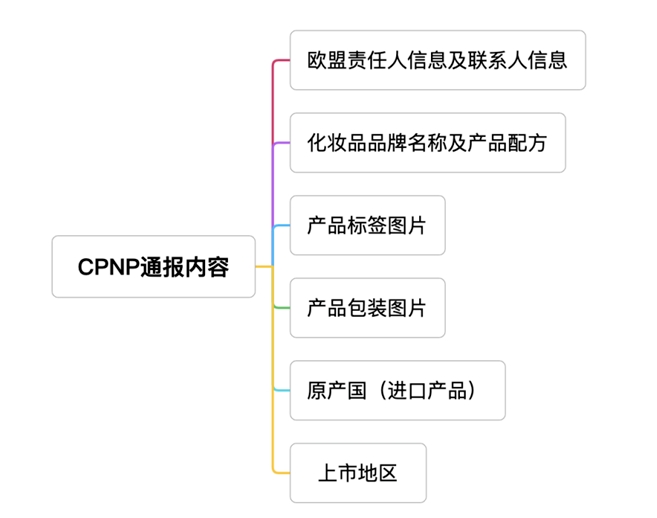
The responsible person usually needs to report the following information to CPNP:
Special attention: When using raw materials containing nanomaterials in the product formula, if the raw materials are not restricted substances (pigments, preservatives, sunscreen or other restricted substances) specified in the EU cosmetics regulations, the responsible person should report to the European Commission electronically 6 months before the product is put on the market. The information submitted to the European Commission should at least include the following content:
Identification characteristics of nanomaterials;
• The properties of nanomaterials, including particle size, physical and chemical properties;
The estimated amount of nanomaterials in cosmetics launched on the market each year;
Toxicological characteristics of nanomaterials;
• Safety data for nanomaterials used in various cosmetics;
Reasonable and foreseeable exposure conditions.
The EU Cosmetic Safety Assessment Report consists of two parts: Cosmetic Safety Information and Cosmetic Safety Assessment.
The EU cosmetics regulations have a clear definition of adverse reactions and serious adverse reactions in cosmetics: "Adverse reactions" refer to discomfort caused by the use of cosmetics under normal or reasonably foreseeable conditions. "Serious adverse reactions" refer to adverse reactions that cause temporary or permanent functional impairment, disability, hospitalization, congenital abnormalities in reproduction, or direct life-threatening or death.